

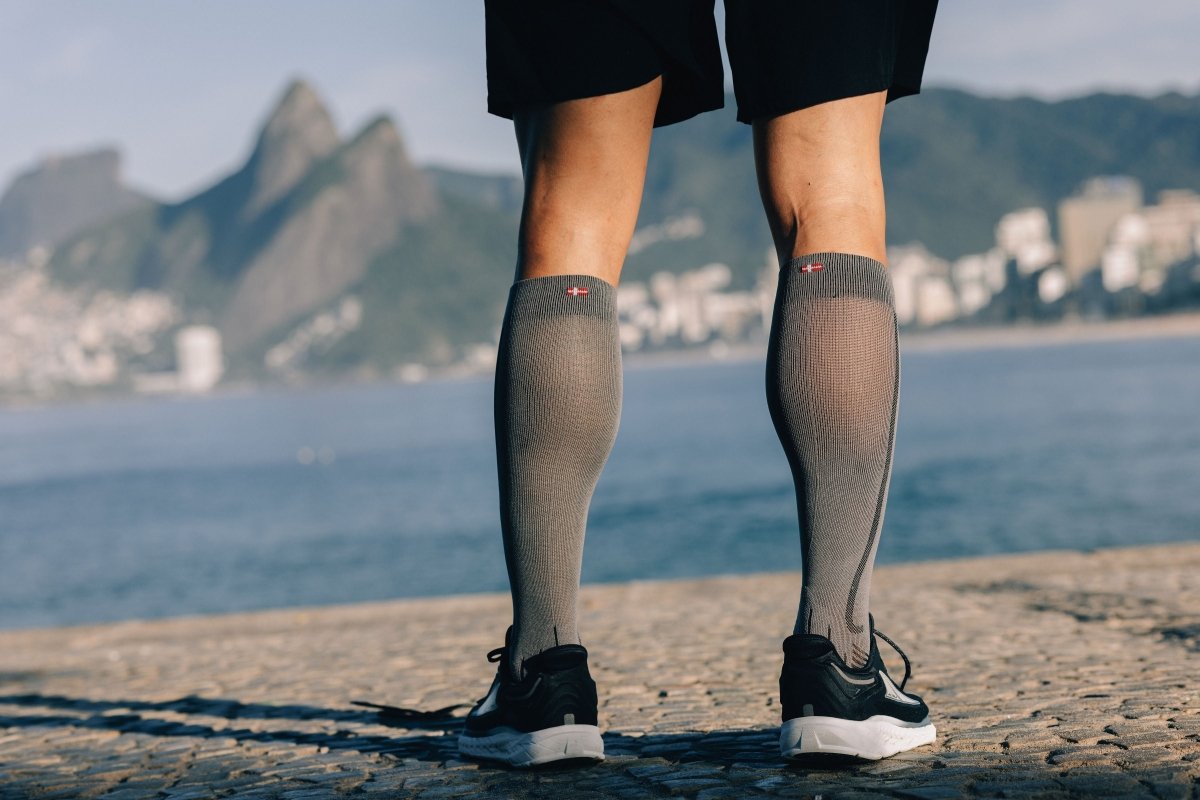
Compression Socks or Sleeve? How to Choose the Right Compression Gear
Quick Answer
Compression socks and sleeves both do the job, but they solve slightly different needs. Choose compression socks if you want one piece of support that covers the foot, ankle, and calf, a solid pick for running, travel, and long days on your feet. Choose calf compression sleeves if you want calf-only support, a bit more ventilation, and the option to keep wearing the socks you already trust.
Key Takeaways
- Compression socks cover the foot, ankle, and calf, while compression sleeves cover only the calf.
- Graduated compression and correct sizing matter more than choosing socks versus sleeves.
- Socks are often better for travel and all-day wear because they support the foot and ankle too.
- Sleeves are practical for warm conditions and athletes who already have socks they trust.
- Compression can support comfort and perceived muscle fatigue, but it is not a substitute for training and recovery.
What Is the Difference Between Compression Socks and Sleeves?
Compression socks
Compression socks are built like long socks with a snug, supportive fit from the foot up to the calf, often knee-high. Because they include the foot and ankle, they can feel more secure in the shoe, especially if you like a stable, locked-in sensation on longer sessions.
If you want an all-in-one option, start with Danish Endurance Compression Socks.
Compression sleeves
Calf compression sleeves are tubes of compression fabric that cover the calf but leave the foot free. You can pair them with any sock you like, thin racing socks, padded hiking socks, or cycling socks, without changing your footwear setup.
For calf-only support, Danish Endurance Calf Compression Sleeves are designed to layer easily.
Key functional difference: full-foot coverage vs calf-only coverage
The decision comes down to one thing: do you want compression on your foot and ankle too? Socks give you continuous coverage in a single piece. Sleeves give you targeted calf compression and more flexibility, but they do not add anything to foot comfort, blister management, or ankle coverage.
When Compression Socks Make More Sense
For running and endurance training
On long runs, fatigue often builds not only in the calf, but also around the ankle and foot. Compression socks can feel more stable in the shoe and are a practical choice when you want consistent coverage from the ground up.
If you already have a favorite running sock for long sessions, compare it against a dedicated compression option like Compression Socks and go with what feels better over 60 to 120 minutes.
For travel and long periods of sitting
For flights, long drives, or desk-heavy days, compression socks are commonly chosen because they cover the foot and ankle as well as the calf. Fit and correct use matter, medical guidance consistently emphasizes proper sizing and appropriate wear for compression stockings (NHS guidance).
If you are traveling, socks are usually the simplest put-them-on-and-forget-them option.
For foot, ankle, and calf coverage
If you deal with foot swelling, shoe tightness late in the day, or you simply prefer full lower-leg coverage, socks are the more complete tool. They also remove the gap you can get when wearing sleeves with low-cut socks.
For athletes who want one-piece support
Socks keep it simple: one item, one fit, one pressure profile. That helps if you do not want to think about sock height compatibility, sleeve slippage, or how your sock cuff sits against the sleeve edge.
When Compression Sleeves Make More Sense
For calf-focused support
If your main issue is calf tightness, or you want a supported feel around the lower leg without changing what happens inside the shoe, sleeves are a direct solution. They are also easy to take off quickly after a session if you do not want foot coverage.
For runners who prefer their own socks
Many runners have dialed-in sock preferences for blister control, toe room, cushioning, or fabric feel. Sleeves let you keep that system and add calf compression on top.
If you want a sock built specifically for long runs, pair sleeves with Danish Endurance Long Distance Running Socks.
For warmer conditions and more ventilation
Sleeves leave the foot uncovered, which can feel cooler, especially in summer running or indoor training. If you tend to overheat in thicker socks, sleeves can be the more comfortable choice.
For easier layering with different footwear
Sleeves are practical if you rotate footwear: trail shoes, road shoes, hiking boots, or cycling shoes. You can keep the same calf compression and simply change socks to match the shoe and the conditions.
Compression Socks vs Sleeves for Different Sports
Running
- Choose compression socks for running if you want a stable, together feel from foot to calf, or if you prefer a single piece of gear.
- Choose compression sleeves for running if you already trust your running socks and want calf support without changing shoe feel.
A lot of athletes end up owning both: sleeves for hot days and socks for long runs or travel.
"I tried compression socks as when I run in shorts I find my calves ache. These socks have stopped all of the ache and I have no problems after my runs. Won't run without them now" , Gill S.
Cycling
Cyclists often stick with their own cycling socks for shoe fit and moisture control. Sleeves can work well here because they do not interfere with the foot inside a tight cycling shoe. If you do want sock-based compression, prioritize a smooth toe area and a fit that does not bunch.
For your sock layer, consider Danish Endurance Regular Cycling Socks with sleeves on top when needed.
Hiking
Hiking usually means more time on feet, more heat management, and more friction risk. If you are wearing boots, sock choice matters for comfort and blister prevention, so sleeves can be a smart way to add calf support while keeping a hiking-specific sock.
In cooler conditions, a supportive hiking sock like Merino Wool Hiking Socks plus sleeves can be a strong combo.
Training and gym work
For strength training, CrossFit-style sessions, and mixed workouts, sleeves are popular because they are easy to put on and take off and do not change your foot feel in trainers. Socks can still work well if you want a single option for training plus commuting or standing at work.
Recovery and travel
For recovery wear, many athletes prefer socks because they are easy to wear around the house and provide full lower-leg coverage. Evidence on recovery benefits is mixed depending on outcomes and study design, but systematic reviews have evaluated compression garments for post-exercise recovery measures like soreness and perceived fatigue (Cochrane Library).
What Compression Can Help With
Muscle support during activity
Compression gear is often used for a held-together feeling in the calf and lower leg. That supportive sensation can be useful during long, repetitive efforts when your form starts to fade.
Reduced fatigue during long efforts
Many athletes report less heaviness and better comfort late in sessions. Keep expectations realistic: compression is a tool for comfort and support, not a shortcut to fitness.
Recovery after exercise
Some research suggests compression garments may help certain recovery markers for some athletes, while effects can be small or variable across studies (PubMed). If you feel better wearing them post-run or post-ride, that comfort can help you stay consistent, often the biggest driver of progress.
Comfort during long wear
For standing jobs, travel days, or long events, compression can simply make legs feel better over time. Correct fit is key, and medical guidance emphasizes appropriate sizing and use (NHS guidance).
What to Look for in Compression Gear
Graduated compression
Graduated compression generally means pressure is higher at the ankle and decreases up the leg. That design is widely referenced in compression therapy guidance and is a key feature to look for when comparing products (NCBI/PMC).
Fit and sizing
Sizing is not optional with compression. Too loose will not feel supportive, too tight can feel restrictive and uncomfortable. Measure as the brand recommends, typically ankle and calf circumference, sometimes calf length, and size for a firm, even feel.
Breathable, durable materials
Endurance use means sweat, friction, and repeated washing. Look for fabrics that manage moisture and hold shape over time. If you train frequently, durability is performance.
Seam construction and comfort
Seams that rub at the toe or around the cuff can ruin an otherwise good product. For socks, pay attention to toe seam comfort. For sleeves, look for edges that stay in place without digging in.
Moisture-wicking performance
Moisture management is a big deal for running and hiking. If your feet run hot or you are prone to blisters, sleeves plus a sock you already trust can be the most practical setup.
How to Choose: Compression Socks or Sleeve?
Choose compression socks if…
- You want foot, ankle, and calf coverage in one piece.
- You are buying primarily for travel, standing all day, or all-around use.
- You prefer a simple system with fewer moving parts.
- You want a consistent feel inside the shoe without mixing sock heights.
A straightforward starting point is Danish Endurance Compression Socks.
Choose compression sleeves if…
- You want calf-focused support without changing your sock setup.
- You already have socks you love for running, cycling, or hiking.
- You train in warm conditions and want more ventilation.
- You need easy layering across different shoes and sock heights.
Try Danish Endurance Calf Compression Sleeves and pair them with your preferred sport sock.
How to Get the Best Results
Wear the right size
Take measurements and follow the size chart. The right feel is firm and supportive, not painful, numb, or overly restrictive.
Use them during the right activity
Use socks for travel days, long wear, and when you want full coverage. Use sleeves when you want calf support but need freedom to choose your sock thickness and height.
Pair with recovery habits
Compression works best as part of a basic recovery routine: hydration, protein and carbs after long sessions, sleep, and easy movement the next day. If compression helps you feel ready to train again, it is doing its job.
Replace worn-out gear on time
If the fabric is stretched, slipping, or losing its snap, the pressure profile will not be the same. Rotate pairs if you train often, and replace items that no longer feel supportive.
FAQ
What is the difference between compression socks and sleeves?
Compression socks cover the foot, ankle, and calf, while sleeves cover only the calf.
Are compression sleeves better than compression socks?
Neither is universally better. Sleeves are better for calf-only compression and flexibility, socks are better for full-foot coverage.
Which is better for running?
Compression socks are often preferred for full lower-leg coverage, while sleeves work well if you already have running socks you like.
Can I wear compression sleeves with regular socks?
Yes. Many athletes wear sleeves with their preferred running or cycling socks.
Do compression socks help with recovery?
Compression socks may help with comfort and perceived fatigue after long or intense activity, but results vary between athletes and studies.
When should I choose sleeves instead of socks?
Choose sleeves if you want calf support without covering the foot, or if you want more breathability and flexibility with sock choice.
Are compression socks good for long flights or travel?
Yes. They are commonly used for long periods of sitting to support leg comfort, and correct sizing is important (NHS guidance).
How tight should compression gear feel?
It should feel firm and supportive, not painful or overly restrictive. If you get numbness or tingling, reassess sizing.
Final Recommendation
Pick compression socks if you want the simplest, most complete option for foot-to-calf coverage, especially for travel, long days, and all-around training. Pick calf compression sleeves if you want calf-only support, cooler wear, and the freedom to use your own socks for running, cycling, or hiking. If you train year-round, owning both is often the most practical setup.

Short vs Long Sleeve Cycling Jerseys: How to Choose the Right One for Your Rides
Best Warm-Weather Hiking Socks: Breathable Merino & Synthetic Options for Cool, Dry Feet