

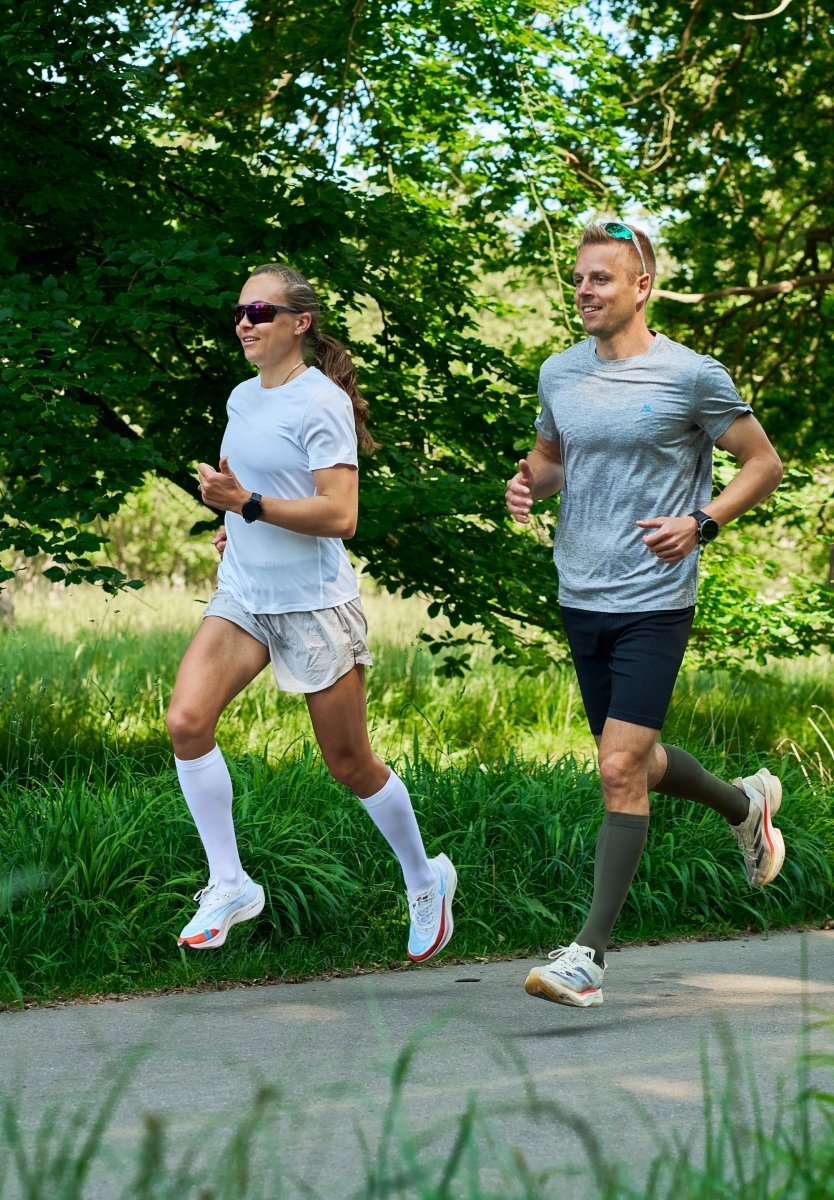
Compression Socks for Running During Summer
Summer running is a balancing act. You want support and comfort, but you do not want gear that traps heat or turns your shoes into a sweat box. The good news is that compression socks for running during summer can work well, if you choose the right materials, fit, and compression level for warm-weather training.
This guide breaks down when compression helps most, what to look for in breathable compression socks, and how to stay cool on long runs, races, and recovery days.
Are Compression Socks Good for Summer Running?
What runners want from summer gear
In warm weather, small comfort issues become big ones. Sweat increases friction, feet swell more easily, and your legs can feel heavier as the temperature climbs. Summer running socks need to do three things reliably:
- Manage sweat (so your feet do not stay wet)
- Reduce friction (to help prevent blisters)
- Stay comfortable when your legs and feet expand slightly in heat
Compression running socks add another layer, calf and lower-leg support. For many runners, that support is what makes long summer runs feel more controlled.
When compression socks help most
Running compression socks tend to be most useful when heat and distance stack up, think long runs, steady efforts, and days when your calves feel worked early.
They are also popular for runners who:
- get calf tightness or lower-leg fatigue
- notice swelling in warm weather
- want a more locked-in feel for long-distance running
When they may feel too warm
Compression socks can feel hot if they are thick, poorly ventilated, or simply too tight. Warmth is usually more about fabric and construction than the fact that the sock is compressive.
If you regularly run in high humidity or midday heat, prioritize lightweight compression socks with strong moisture management, and consider using compression more strategically (for long runs and recovery rather than every easy jog).
Key Benefits for Warm-Weather Runners
Support during long runs
As fatigue builds, form can get sloppy, especially in the calves and ankles. Calf compression socks for running can give a stable, supported feel that many runners appreciate on longer efforts.
Help with leg fatigue and swelling
Heat can increase fluid retention and make your lower legs feel puffy or heavy, particularly on long runs or when you are on your feet all day. Compression socks for hot weather are often chosen to help runners feel more comfortable when swelling is part of the problem.
Better comfort over distance
Comfort is not just cushioning. It is also fit, friction control, and staying dry. A good pair of athletic compression socks should stay in place, avoid bunching, and reduce hot spots that can turn into blisters over time.
Recovery support after training
Many runners use recovery compression socks after hard sessions or long runs, especially in summer when legs can feel more drained. Wearing compression post-run can be a practical way to support your normal recovery routine, hydration, carbs/protein, and putting your feet up.
"I tried compression socks as when I run in shorts I find my calves ache. These socks have stopped all of the ache and I have no problems after my runs. Won't run without them now" — Gill S.
What to Look for in Summer Compression Socks
Breathable materials
For summer running socks, breathability starts with the yarns and knit structure. Look for technical fibers designed for performance and ventilation zones that let heat escape.
If you want a dedicated option, start with the Compression Socks category and focus on models built for training rather than everyday wear.
Moisture-wicking performance
Moisture-wicking running socks pull sweat away from the skin so it can evaporate. That matters in summer because wet fabric increases friction and makes your feet feel hotter.
A quick self-check after a run:
- If your socks feel soaked and heavy, you need better moisture management.
- If your feet feel damp but not waterlogged, you are closer to the right fabric.
Lightweight construction
Lightweight does not mean flimsy. The best compression socks for running in summer are often thin where you need airflow and reinforced where you need durability (heel, toe, and high-wear zones).
Proper fit and compression level
A breathable sock that fits poorly will not feel breathable for long. If the sock is too small, it can feel restrictive and hotter. If it is too big, it can slide and create friction.
Aim for a fit that feels:
- snug and supportive
- evenly tight (no sharp pressure points)
- stable around the arch and ankle without bunching
Seamless or low-friction design
In summer, blisters happen faster. Prioritize anti-blister running socks features like:
- smooth toe construction
- low-friction yarns
- secure heel fit to reduce slipping
If you prefer a non-compression option for the hottest days, consider rotating in dedicated distance socks like Long Distance Running Socks for sweat management and blister control.
Durable fabric for repeated use
Summer training often means more laundry and more miles. Durability matters. A good sock should keep its shape and support after repeated washing, not stretch out or thin quickly in the heel.
How to Choose the Right Compression Level
Everyday training vs long-distance runs
For everyday runs, many runners prefer moderate compression that feels supportive without demanding attention. For long runs and races, some runners like a firmer feel, especially if calves tend to fatigue late.
Beginner-friendly fit considerations
If you are new to running compression socks, start with a level that feels comfortable from the first minute. A practical rule: if you are constantly thinking about the tightness, it is probably too much for summer running.
When stronger compression may be useful
Stronger compression can be useful for:
- long travel days to races
- extended time on your feet
- runners who consistently deal with swelling
But in hot weather, stronger compression paired with thick fabric can feel like overkill. Prioritize breathability first, then dial in compression.
How to Stay Cool While Wearing Compression Socks
Choose thin, technical fabrics
Look for socks designed as performance gear, not casual support. Thin, technical knits with ventilation zones are the difference between surprisingly comfortable and too hot.
Wear them for the right run type
Compression is not mandatory for every session. Many runners save compression socks for:
- long runs
- tempo/steady efforts
- race day
- recovery after hard training
For short easy runs in peak heat, a lighter sock can be the smarter choice, like Low Cut Running Socks.
Pair with breathable running shoes
Socks cannot fix a shoe that runs hot. If your feet overheat, check:
- upper material breathability
- whether your shoes are too tight in summer swelling
- if your insoles trap heat
A breathable shoe plus moisture-wicking sock combo is often the biggest upgrade.
Use them for early runs, races, or recovery
If you love the feel of compression but struggle with midday heat, shift your use:
- wear compression on morning runs
- use them for race efforts
- wear them after training when staying cool is easier
Best Use Cases for Summer Running
Long-distance runs
For socks for long-distance running, the priorities are sweat control, friction reduction, and a fit that does not move. Compression can add a supported feel that helps you stay comfortable as fatigue builds.
Marathon and half-marathon training
Marathon blocks often include long runs plus accumulated fatigue. Compression running socks can be a useful tool on key sessions when calves take a beating, especially if you are training through warmer months.
Travel and race days
Travel plus heat can leave legs feeling heavy before you even start. Many runners wear compression during:
- car/plane travel
- pre-race time on your feet
- post-race cooldown and the hours after
If you prefer less coverage in the heat, Calf Compression Sleeves can give calf support while leaving the foot in your preferred summer running sock.
Recovery after hard sessions
After intervals, hills, or long runs, recovery is about consistency. Compression socks can fit into that routine, alongside hydration, food, and sleep, when your legs feel beat up.
Are Compression Socks Better Than Regular Running Socks in Summer?
Comfort trade-offs
Regular summer running socks can feel lighter and cooler. Compression socks can feel more supportive but slightly warmer, depending on fabric and thickness.
Support vs ventilation
If your main issue is overheating, a lightweight non-compression sock may be best. If your main issue is calf fatigue, swelling, or lower-leg discomfort, breathable compression socks are often worth it.
When each option makes sense
- Choose compression socks for hot weather when support and long-run comfort matter most.
- Choose regular running socks for warm weather when you want maximum airflow and minimal coverage.
Many runners rotate both depending on the session.
Fit and Care Tips
How compression socks should feel
They should feel like a firm, even hug, not a squeeze. You should be able to run normally, with no tingling, numbness, or sharp pressure at the top band.
Sizing and calf fit
Measure where the brand recommends (often calf circumference and shoe size). If you are between sizes and running in heat, consider the option that avoids excessive tightness, summer swelling is real.
Washing and durability tips
To keep compression and shape:
- wash according to the care label
- avoid excessive heat drying when possible
- rotate pairs if you run frequently (less wear per sock, longer lifespan)
Why Danish Endurance Compression Socks Fit Endurance Training
Built for performance and comfort
Danish Endurance compression socks are designed for athletes who train consistently and need gear that performs in real conditions. The focus is on support, comfort, and sweat management, not gimmicks.
Explore the Compression Socks range to find options suited to training, travel, and recovery.
Designed for repeated use
Endurance training means repetition: weekly long runs, back-to-back sessions, and frequent washing. Durable construction and stable fit help your socks keep performing over time.
Suitable for running, travel, and recovery
If you want a flexible setup for summer:
- compression socks for long runs and recovery
- lighter running socks for the hottest easy days
- calf sleeves when you want support with less foot coverage
FAQ
Are compression socks good for running in summer?
Yes, if they are made from breathable, moisture-wicking materials and fit properly. Lightweight compression socks can provide support without feeling overly heavy in warm weather.
Do compression socks make your feet hot?
They can if the fabric is thick or poorly ventilated. For summer running, choose thin, technical socks designed to manage heat and sweat.
What are the best compression socks for warm-weather running?
Look for lightweight, quick-drying socks with good breathability, supportive compression, and a comfortable fit around the calf and foot.
Can compression socks help on long summer runs?
They can help many runners feel more supported and comfortable over distance, especially when legs feel heavy in the heat.
Should I wear compression socks for every run?
Not necessarily. Many runners use them for long runs, harder sessions, races, travel, or recovery rather than short easy runs.
How tight should compression socks be?
Snug and supportive, but not painful or restrictive. Proper sizing matters, especially in summer when your feet and calves may swell slightly.
Are compression socks better than regular running socks in summer?
It depends on your goal. Compression socks offer more support, while regular running socks may feel lighter and cooler. For long runs, the support can be worth the trade-off.
Can compression socks help with swelling in hot weather?
They may help manage swelling and improve comfort, especially during long runs, travel, or long periods on your feet.


What Gear Do I Need to Plant a Forest? Tree Planting Outfit Guide
How to Prevent Blisters in Summer for Runners, Hikers, and Cyclists (Hot Spot & Sock Tips)